AI is coming for wedding filmmaking: How to make sure it takes the right job
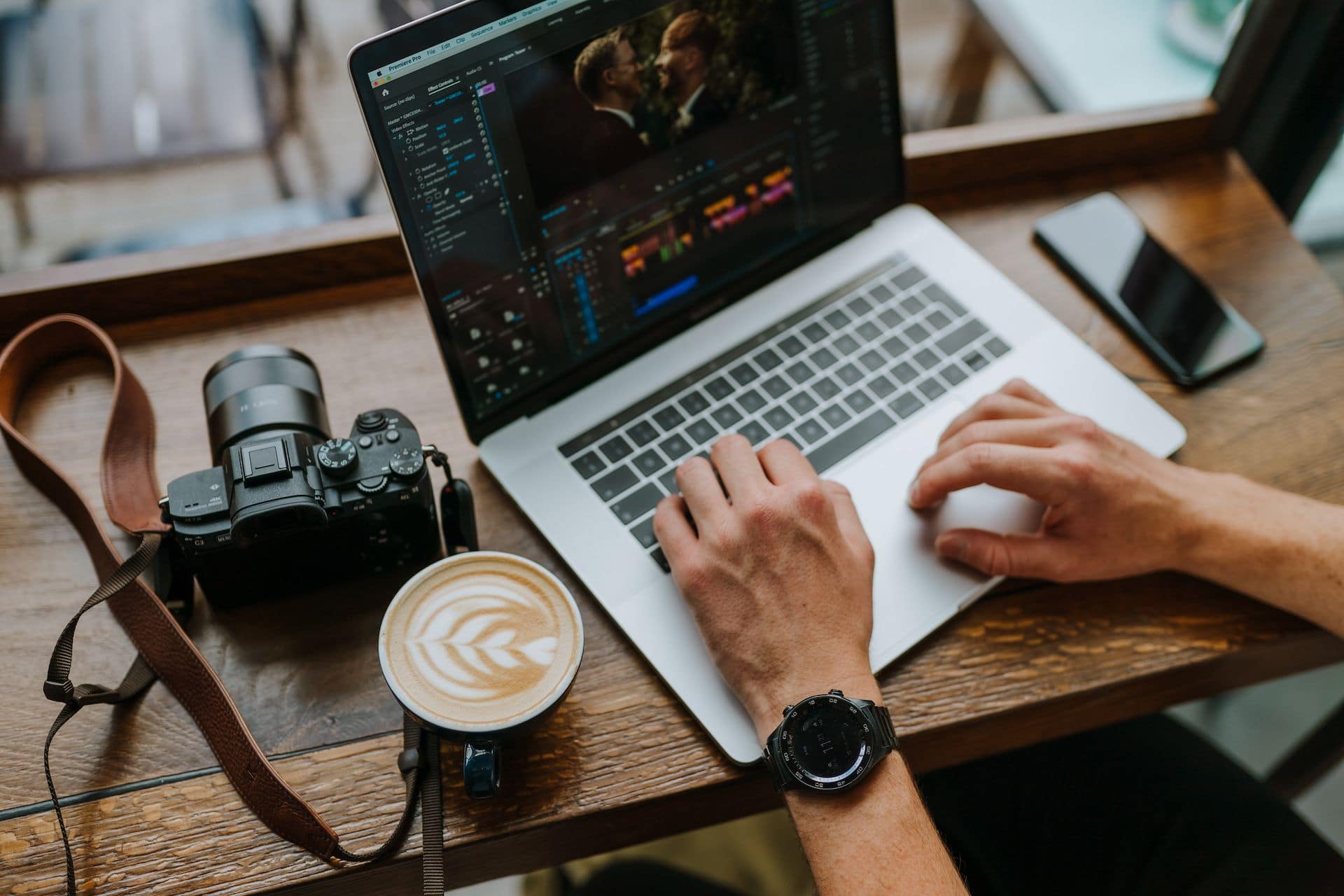
For better or for worse, it feels like AI is touching every industry. But in the little old world of wedding filmmaking, we’ve been relatively unaffected so far. Those days may be behind us.
There are of course lots of tools already that help us within an edit. I’m sure most of us are using Adobe Podcast, for example, to clean up audio, and there were several times last year I found myself using lalal.ai to remove lyrics from songs that didn’t already have an instrumental version. In a few commercial projects over the past 12 months, I’ve used voice clones to reword voiceovers, and even fixed a bride’s vows by cloning her in Speechify.
But beyond these small quality-of-life improvements, there’s very little available that will seriously impact our workflows as wedding filmmakers. That may all be about to change. There are a plethora of companies vying for our custom and competing to become the default AI tool in the editing world. Services like Spingle and Eddie are aiming to be jack-of-all-trades editing assistants, promising to do “intelligent selects and rough assembly” for you, while others such as Plotline Pro and Imagen are choosing to take on smaller parts of the editing process, like building a narrative or colour-grading, respectively.
There’s definitely a void here, and given the rapid and widespread adoption of AI in so many other industries, it’s easy to see how any company that becomes a household name for AI editing will make a lot of money. The question for us to consider is what happens when one of these companies reaches that point — what does it mean to use AI as a filmmaker?
How will AI be used in editing?
Regardless of which of the above tools become widely adopted, I’m sure it won’t be long before there’s a raging debate about the ethics and the morals of allowing AI into our workflows. There are already people with firm opinions on each side. I recently spoke to a photographer who, despite the widespread adoption of AI in image editing and culling, refused to use AI for even the most simple and mindless of tasks. He is of the opinion that doing things by hand has inherent value that should be upheld. Like this photographer, a large number of people are staunch bastions of doing things manually; they want nothing to do with AI. For others, AI is welcomed with open arms.
Personally, I get enormous amounts of value from AI every single day. To give you an idea of how invested I am, here’s how the robots play into my typical day:
I wake up and I get a summary of my day yesterday from Omi — the AI pendant I wear. It was listening to everything, so it gives me highlights, any outstanding tasks, advice on how to be a better partner and a better dad, and summaries of anything that I learned that day.
By the time I’m sat at my desk, Claude Cowork has looked at my to-dos across different to-do apps and multiple CRMs, and has let me know which tasks it can do for me. I give it the green light and it goes off and clicks around Google Chrome for me, responding to enquiries, sending invoices, and even doing my groceries shop on Tesco.
Meanwhile, I’m sat editing, and every mouse click and keystroke I make is being logged and sent to an AI assistant, Poke, which analyses my productivity and, at the end of the day, lets me know how much time I wasted today. All day long, Omi captures tasks from conversations I didn’t even know I needed to remember. There have been some real wow moments when Omi has pinged my phone to remind me to do the thing I never thought to write down.
As you can see, I’m about as plugged in as you can possibly be, and so you’d be forgiven for assuming I would want AI to take over every part of the editing process. But that isn’t the case.
What should we let go of?
For me, using AI for admin is fine. There’s no humanity in the daily rigmarole of responding to leads and sending quotes and invoices. This is busywork. I don’t feel that anything is lost by handing that over to AI.
That same sentiment also extends to some parts of the editing process for me. Colour grading, for example, I consider to be busywork. We may all have our distinct styles, but we’re mostly just making things consistent shot-to-shot. In Hollywood, colour is used as a filmmaking tool to evoke different emotional responses from scene-to-scene, but we basically never get to use colour in this way in our work; what wedding clients want 99% of the time is consistency and warm skin tones. So if AI can take my default look and apply it across a film, while matching cameras and balancing everything so that it’s in the right ballpark, that doesn’t feel like I’m giving away a part of my soul. It feels like I’m dropping a repetitive task that doesn’t hold much inherent value.
On the other hand, something like building a narrative is, for me, sacred. When you decide which order to put snippets of speeches and vows, what you’re essentially doing is making a judgement about human emotion. You are making a decision on what will best elicit an emotional response in the viewer. Ascertaining which parts are valuable, and which darlings need to be killed, recognising how to pace a story, and building to an emotional crescendo — these things are at the core of what it means to be human. This is something I feel passionately should not be (and probably could not be in any meaningful sense) done by artificial intelligence. To hand this off to a computer is, in my eyes, to hand off the very essence of what gets me fired up about filmmaking.
The real question
As you can probably tell, building a narrative is a part of the wedding filmmaking process that I enjoy. Sitting at my desk tinkering and pressing buttons that may or may not have the effect of making people cry is what it’s all about!
Colour grading? That I do not enjoy. It’s not for me. I appreciate that will be different for others — maybe you love colour grading but hate building a narrative. Culling is another part of the process that I feel is important to do manually — I think you end up with a better film when you spend more time immersed in the footage — but I know a lot of people would view that as busywork. Everyone’s version of this will be different, and that’s fine. The point isn’t that there’s one correct answer — it’s that you consciously decide which parts of the process are sacred to you.
So instead of asking “Should I use AI?”, I think the better question is: if I automate this step, what do I lose? Is this a meaningful part of the filmmaking process to me? If the answer is no, it’s probably busywork. Let the robot have it. Accept the help to free you up to spend more time on the bit that is meaningful to you — the bit that you enjoy, or the bit that you think is just important. Yes it may be slower and more annoying to do it by hand, but in this AI-sculpted new world order that we’re heading for, finding meaning and humanity in our work may become the lifeblood that keeps us both passionate and desirable to the market.